
Halifax County Criminal Court Cases
Halifax County belongs to Prosecutorial District 7, Superior Court District 7A, and District Court District 7. North Carolina Judicial Branch records for Halifax County identify the local courts, calendars, forms, and current service notices. Superior Court hears felony trials and related superior matters. District Court handles misdemeanors, infractions, and the early stages of felony cases. A felony may first appear in District Court before an indictment moves it into Superior Court. Halifax County has no separate municipal criminal court for its towns.
The Clerk of Superior Court holds both court levels at 357 Ferrell Lane, Halifax, NC 27839. The office is open Monday through Friday from 8:30 a.m. to 5:00 p.m., and its main line is 252-593-3000. The District Attorney can be reached at 252-593-3010, but the DA is not the public file custodian. Court users should ask the clerk for dockets, pleadings, orders, judgments, and certified copies. An arresting agency keeps its own incident narrative, which is distinct from the Halifax County criminal court record.
Halifax County eCourts Case Search
Remote discovery runs through the North Carolina eCourts Portal, also known as Enterprise Justice or Odyssey. Halifax joined the statewide eCourts system in April 2025. Portal can reveal case numbers, parties, filed charges, events, and status at the approved public level. It is not the Judicial Branch's formal statewide background-check product. Registered access may add My Cases and activity tools, but public visibility still depends on the record category.
Start with the exact case number when it is known. For a name search, include the first and middle name, select Halifax as the location, and compare filing dates and charge details. Common names create false matches. The live interface may change labels by device or login state, so the controls below describe the official research inspection rather than a promise that every screen looks the same.
| Portal control | Type | Required | Use |
|---|---|---|---|
| Search Type / Smart Search | Tab or control | Yes | Select a person or case path. |
| Search by | Dropdown | Yes | Choose name or case-number criteria. |
| Last Name / Business Name | Text | Conditional | Enter a surname and verify common-name results. |
| First and Middle Name | Text | Optional | Narrow likely person matches. |
| Case Number | Text | Alternative | Use the exact docket identifier. |
| County / Location | Dropdown | Optional | Select Halifax to localize results. |
| Date range | Date controls | Optional | Limit calendar or event paths. |
The official court-date interface is a useful second check for a pending event. Its search screen is shown here without making any private defendant the subject.
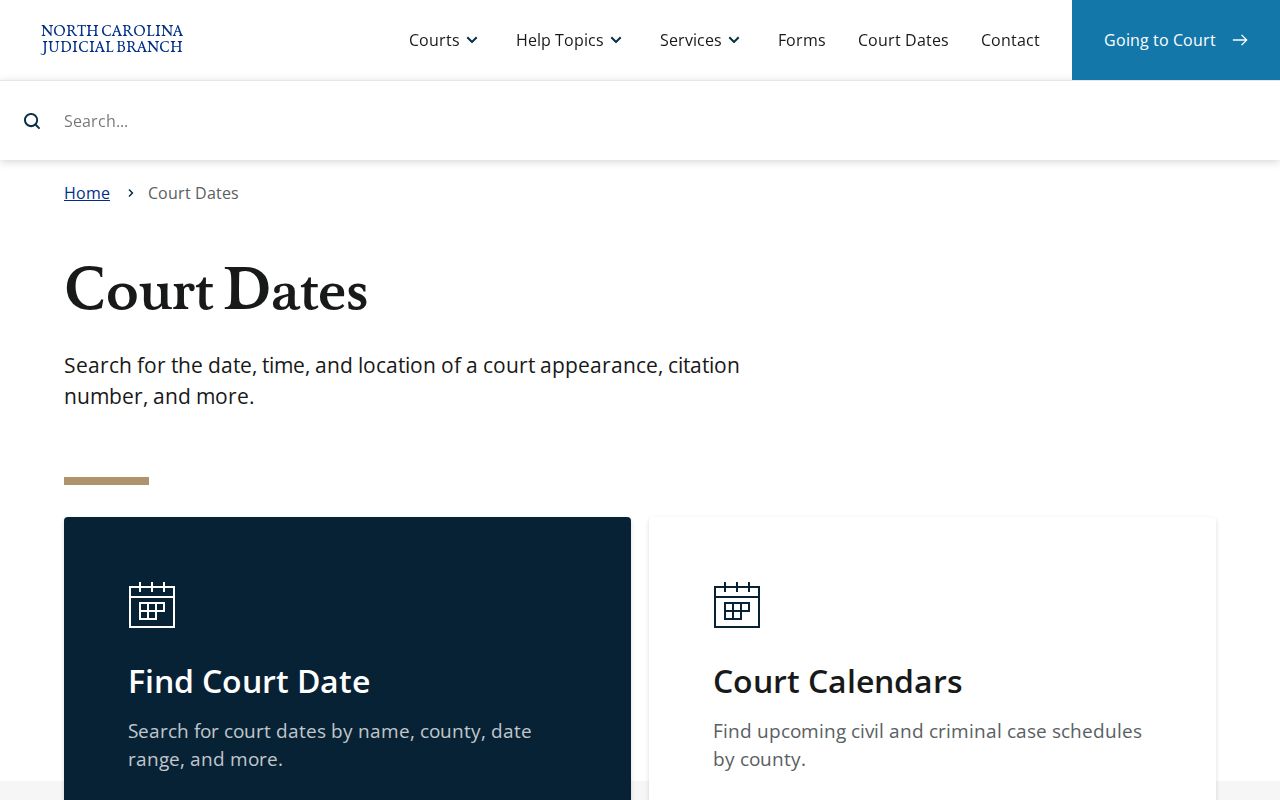
A calendar confirms where and when a matter may be called. It does not replace the charge-level docket or judgment.
Searching Halifax County Case Records
A careful Halifax County case search uses remote and courthouse channels together. Portal is best for discovery. The clerk terminal and file supply records that may not be scanned for remote viewing. Certified copies come from the clerk, not from a screen print. Use this sequence to keep the person, case, and outcome tied together.
- Open eCourts Portal and choose the person or case-number search route.
- Enter the most exact name or docket number available, then select Halifax as the county.
- Compare the division, file date, charge, and status before treating a result as a match.
- Check the court-date tool when a hearing is pending, but return to the docket for the full history.
- Call or visit the Halifax clerk for a paper file, an archived item, or a certified copy.
Free viewing is available on public-access terminals at clerk offices. Copies cost extra. A separate statewide, name-based clerk search costs $25 under current Judicial Branch guidance. That product searches court records and is not a fingerprint-verified SBI repository history. For an older file, note the case number before asking staff to retrieve paper or archived material.
Halifax County Court Levels Compared
North Carolina splits Halifax County criminal cases by court level and procedural stage. This division can confuse a reader who sees a felony matter on a District Court calendar, then later sees it in Superior Court. District Court may conduct early felony proceedings. A grand-jury indictment is the formal accusation that sends a felony prosecution forward in Superior Court. Misdemeanor trials generally remain in District Court.
| Halifax court | Main criminal work | Record point |
|---|---|---|
| District Court | Misdemeanors, infractions, and preliminary felony matters | Clerk docket, calendars, orders, and judgments |
| Superior Court | Felony trials and related superior matters | Clerk felony file, motions, plea or trial, judgment |
| Magistrate | Warrants, initial appearance, and bond functions | Process that later appears in the clerk case file |
The Halifax magistrate line is 252-593-3019. Magistrates in Roanoke Rapids and Enfield handle local process access, but they do not maintain separate complete criminal court databases. The centralized clerk file remains the best place to reconstruct what the court did.
Inside a Halifax County Case File
A case summary should be read below the case-level status. “Disposed” only means that the court completed the case. It does not say whether each charge ended in guilt, dismissal, or acquittal. The Halifax County criminal court file may also contain process, scheduled events, counsel entries, financial obligations, and documents that are not displayed remotely.
| Case header | Case number, Halifax location, court division, file date, case type, and status. |
|---|---|
| Parties | State of North Carolina, defendant, and counsel where publicly listed. |
| Charges | Description, statute or code, offense date, level, charge status, and disposition. |
| Events and hearings | Service, first appearance, indictment, arraignment, motions, continuances, plea or trial, judgment, and review dates. |
| Judgment and sentence | The court's final ruling, sentence, costs, restitution, and compliance entries at the public level. |
| Documents | Availability depends on scanning and access classification; some items require a clerk request. |
Judicial Branch instructions for obtaining court records explain the terminal, paper-file, and Portal routes.
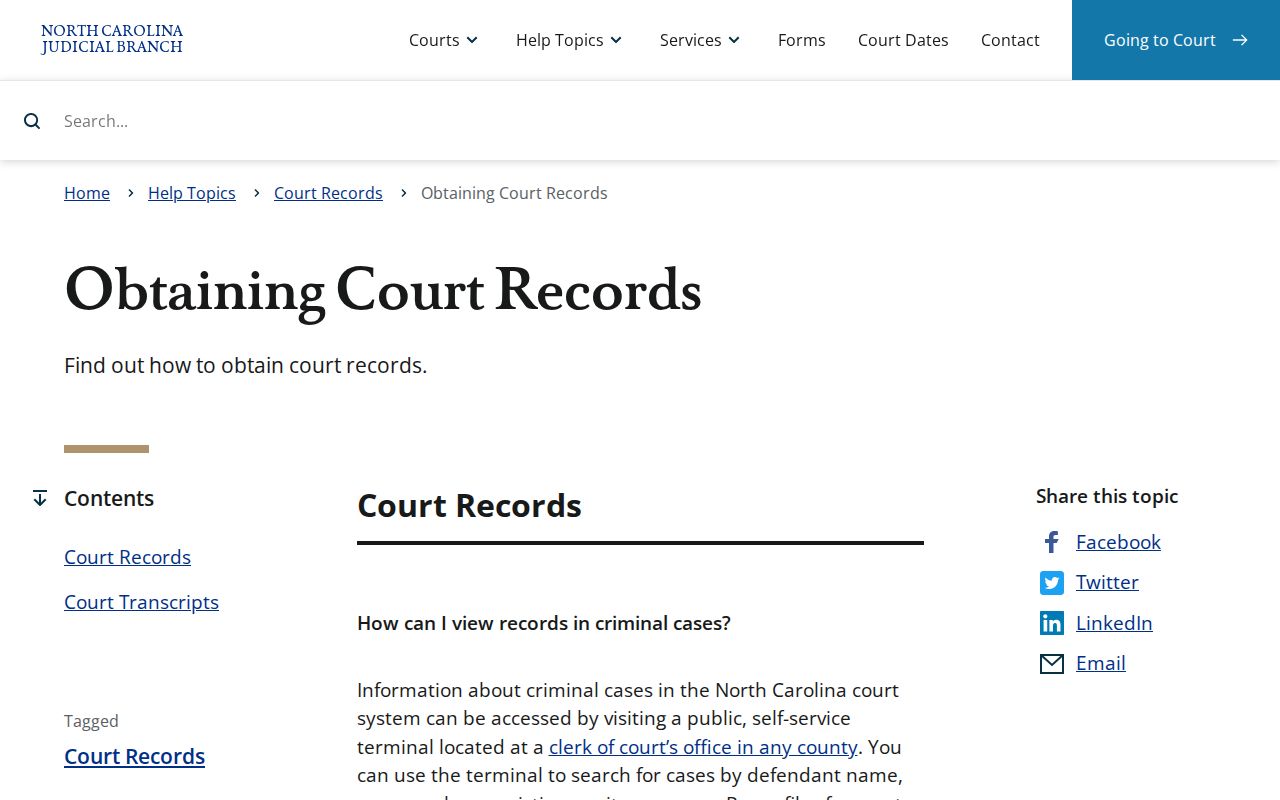
The image reinforces the key distinction: online access helps locate a case, while the clerk supplies the complete available file and certified proof.
Read Halifax County Charge Outcomes
Each charge needs its own reading. An arrest charge can be changed, replaced, or never filed after prosecutor review. A single Halifax County case may contain a guilty result on one count and dismissals on others. The words used in North Carolina records have specific meanings, and they should not be collapsed into one broad case label.
- Disposition
- The outcome of one charge, not merely the status of the full case.
- Dismissal
- A charge ended without conviction, though the historic record may remain unless expunction law applies.
- Acquittal
- A not-guilty determination after the court process.
- Nolle prosequi
- The prosecutor's formal choice not to proceed at that time.
- Judgment
- The court's official ruling and, after guilt, the controlling sentence record.
When a disposition looks incomplete or wrong, first obtain the certified court outcome. Then identify the official system that still shows the error. The clerk can address its case file, while SBI has a separate correction route for a fingerprint-linked repository history. A screenshot alone is weaker than a certified document.
Note: A dismissal does not automatically remove every lawful historical record; North Carolina expunction depends on the exact statute and outcome.
How a Criminal Case Moves
A Halifax County prosecution often starts with an arrest or citation, followed by a prompt appearance before a judicial official. The prosecutor reviews the accusation. A felony that proceeds in Superior Court usually requires grand-jury action, while a misdemeanor normally stays in District Court. Motions, plea talks, or trial follow. The file closes with a charge-level disposition and, when guilt is entered, a judgment and sentence.
Case flow: Charges Filed › Arraignment › Pretrial › Plea or Trial › Disposition › Sentencing
The flow is not a promise of timing. Continuances, added charges, dismissal, appeal, or other lawful events can alter the path. The clerk docket records what occurred. A police report records the agency's account, and the Halifax County arrest lookup explains the earlier booking trail. Those sources answer different questions.
Halifax County Paper Court Files
Some Halifax County court records remain counter-dependent. Older or unscanned documents may not open in Portal even when the case summary appears. Visit the public terminal, record the file number, and ask the clerk for the electronic, paper, or archived record. Ask separately when a certified copy is needed. Certification is the clerk's attestation that the copy matches the official record.
Halifax County Clerk of Superior Court
357 Ferrell Lane
Halifax, NC 27839
Mail: P.O. Box 66, Halifax, NC 27839
252-593-3000
Monday-Friday, 8:30 a.m.-5:00 p.m.
The Halifax County court payment instructions say mail payments use money order or certified check, not cash or personal checks. The counter accepts cash, major credit or debit cards with processing fees, money order, or certified check, but not personal checks. Payment rules do not establish copy fees. Confirm the current copying and certification charge before ordering.
The statewide Judicial Branch forms catalog is searchable and includes criminal and expunction forms.
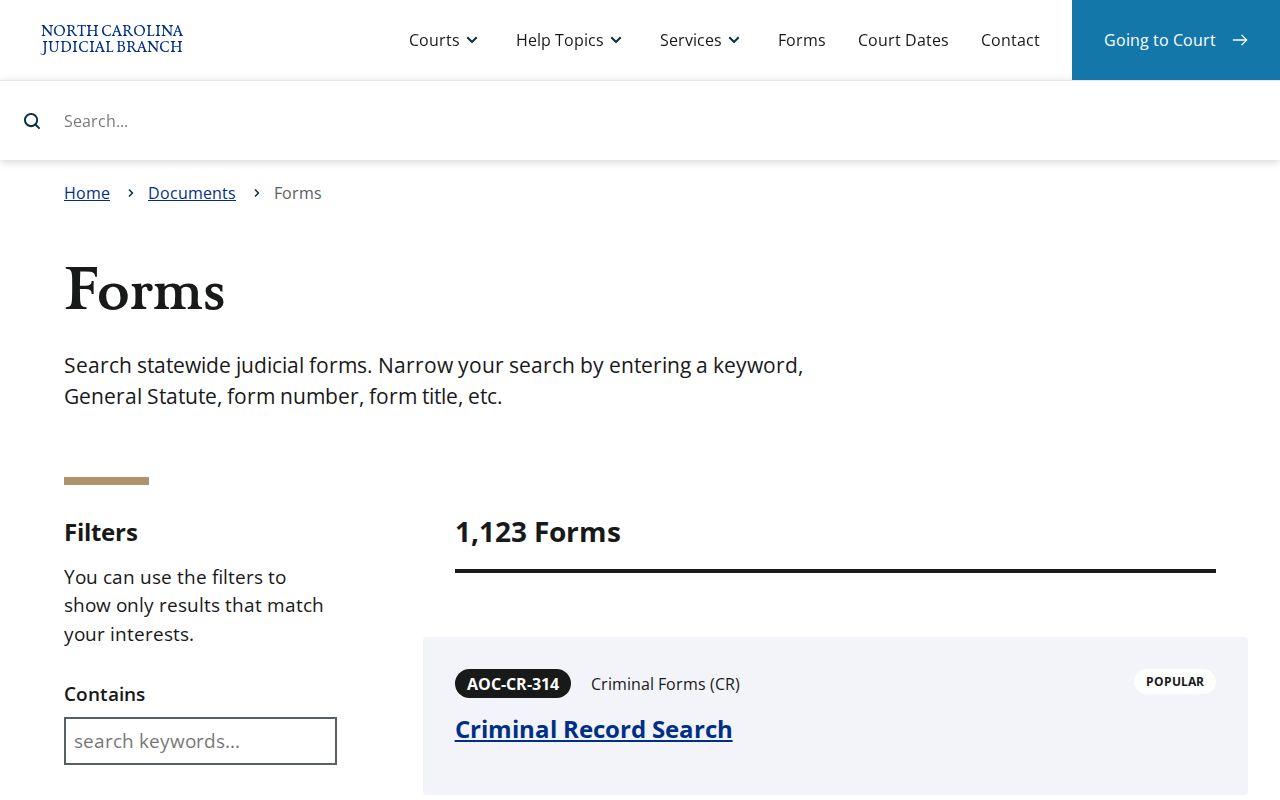
Using the current form matters because filing routes and required affidavits vary with the relief sought.
Case Record Access & Restrictions
G.S. 7A-109 generally opens clerk records to public inspection, with fees and statutory exceptions. Public access does not expose every item. Juvenile matters, expunged files, sealed documents, protected victim or minor information, Social Security numbers, financial identifiers, and some addresses remain restricted or redacted. The remote view may also show less than the courthouse file because a document has not been scanned or its access class requires staff review.
If no Portal result appears, verify spelling, aliases, county, and case number. Then ask the clerk whether the case is older, archived, sealed, expunged, or otherwise restricted. Staff can explain access and copy procedure, but they cannot treat a nonpublic record as public. North Carolina's Public Records Law does not override specific court confidentiality rules.
Federal Cases Beyond Halifax Courts
Federal charges are not filed in the Halifax County clerk's state-court docket. Halifax County lies in the U.S. District Court for the Eastern District of North Carolina. Search the official federal docket through PACER, which requires registration and may charge usage fees under its current schedule.
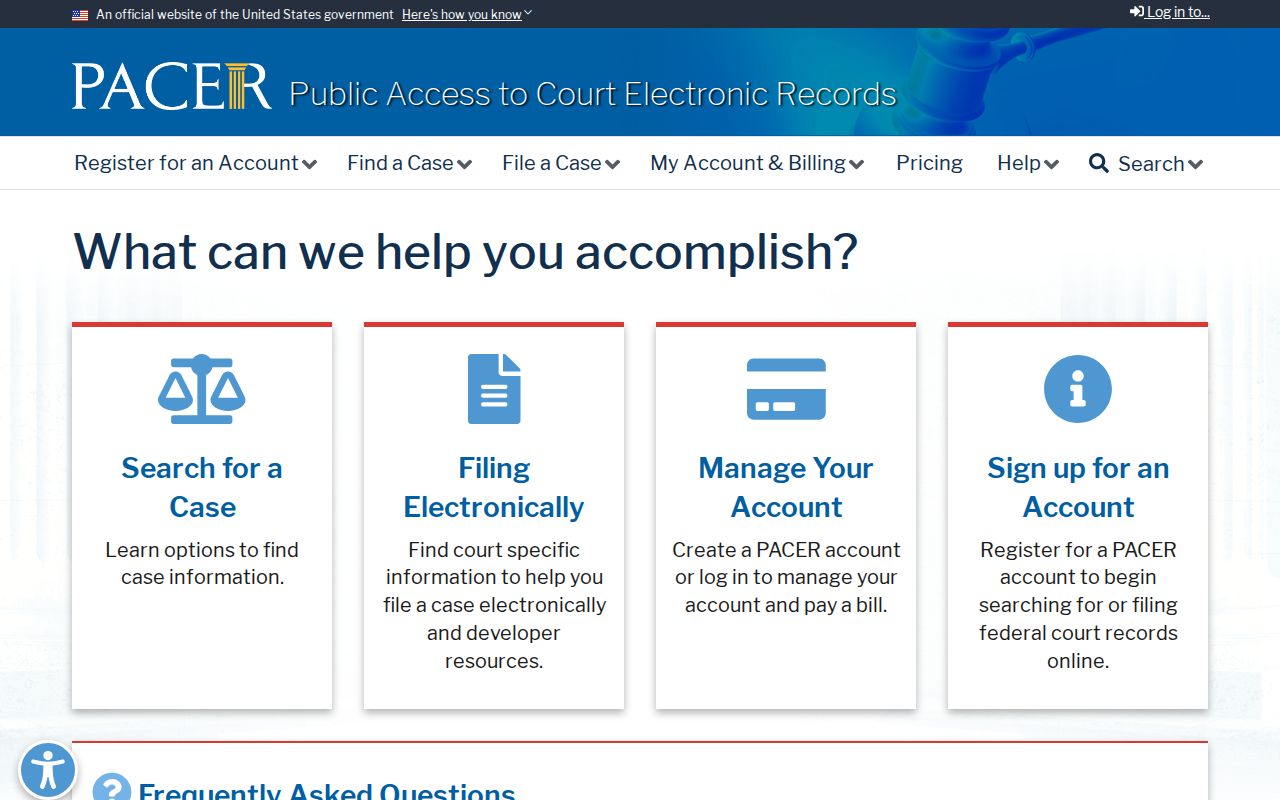
The federal interface belongs in a separate search path. A Halifax eCourts query cannot rule out a federal prosecution, and PACER cannot replace a North Carolina certified state judgment.