
Halifax County Arrest History
No single Halifax County arrest record contains the full story. The arresting agency holds the event report. The Halifax County Detention Center creates the booking and custody entry. A magistrate handles initial process and release conditions. The prosecutor can change or decline the intake charge, and the clerk records filed charges and outcomes. Fingerprints may link that arrest cycle to the North Carolina State Bureau of Investigation repository.
This chain matters most when records conflict. A jail charge describes why the person was received. It may differ from the accusation later filed in District or Superior Court. A case can also end in dismissal or acquittal. Always match the incident number, booking number, court case number, dates, and identity details instead of relying on a name alone.
Halifax County Arrest Agency Map
Halifax County spans rural areas and several towns, so the report custodian depends on the arresting officer. The Sheriff handles its own county investigations and runs the jail. Roanoke Rapids, Enfield, and Scotland Neck police retain reports their officers create. The North Carolina State Highway Patrol keeps its own state-road arrest and crash material. A city arrest can therefore create a city report and a county booking at the same time.
| Agency | Record scope | Official route |
|---|---|---|
| Halifax County Sheriff | Sheriff incidents, arrests, warrants, and jail bookings | 355 Ferrell Lane; 252-583-8201 |
| Roanoke Rapids Police | City-created incident and arrest reports | Official city Police Records contacts |
| Enfield Police | Town-created incidents and arrests | Official town police or written-request route |
| Scotland Neck Police | Town-created incidents and arrests | Official town police contact |
| State Highway Patrol | State-road enforcement and crash records | Official Patrol channels |
Ask the creating agency for the narrative report, the Sheriff for detention status, and the clerk for the prosecution. Neither the Sheriff nor city police can issue the court's certified final judgment.
Looking Up Halifax County Arrests
Halifax County does publish an official detention-center inmate search, but its data can change fast. The released-inmate view is limited to the prior 24 hours, some people may be excluded, and the embedded controls were not clear enough in official inspection to claim exact field labels. Use the jail phone when the roster does not answer the question.
- Identify the likely arresting agency and request its incident or arrest report.
- Check the official jail search, then call 252-583-3081 with the person's full name for current custody.
- Search North Carolina eCourts and court dates, allowing time for the filed case to appear.
- Ask the Halifax clerk for charges, the case file, and a certified disposition.
- Use NCDAC for state custody or supervision, or SBI Right to Review for the subject's fingerprint history.
These are complementary channels. A roster can be newer than a court file, while a court judgment is stronger on final outcome. An SBI Right to Review is subject-only and does not operate as a public name lookup.
If the arrest is new and Portal shows nothing, do not treat the gap as proof that no charge exists. Intake, prosecutor review, and case entry take time. Save the booking number and call the clerk again with the exact name and arrest date. If the person has been released, the jail's short released-inmate window makes a direct records request more useful than waiting for an old roster entry to return.
Halifax County Booking Process Trail
Booking records identity, the arresting agency, intake charges, fingerprints and photograph where required, property, screening, process, bond, and custody location. Under G.S. 15A-502, North Carolina requires fingerprints and photographs for covered arrests. A person arrested without a warrant must be brought before a judicial official without unnecessary delay under G.S. 15A-511.
Record flow: Agency Arrest › Jail Booking › Magistrate Process › Prosecutor Review › Clerk Case › Disposition
The magistrate, not the public roster, controls the initial release order. Halifax has magistrate contacts in Halifax, Roanoke Rapids, and Enfield. Those lines can help with process and first-appearance questions, but they do not maintain three separate arrest databases. The court file becomes the source for what was filed and how each charge ended.
Inside a Halifax County Arrest Record
A Halifax County arrest record is easiest to verify when the reader separates event data from booking, release, prosecution, and repository fields. Public display may redact birth data or other identifiers. Medical, mental-health, suicide-watch, juvenile, victim, protective-custody, and security facts should never be assumed public.
| Event | Date, time, location, incident number, arresting agency, and officer. |
|---|---|
| Subject | Name, aliases, age or birth data, and descriptors at the lawful public level. |
| Legal basis | Warrant number or the process tied to a warrantless arrest. |
| Booking | Booking number and time, intake charges, fingerprints, photograph, property, and facility. |
| Release | Bond type and amount by charge, process, custody status, and release time. |
| Prosecution | Filed or amended charges, hearings, disposition, judgment, and sentence at the clerk. |
| Repository cycle | Fingerprint-linked arrest and reported outcome maintained by SBI. |
Do not infer a conviction from the photograph or intake charge. Use the case number to move from the booking record to the court outcome.
Request Halifax County Arrest Reports
The Sheriff's county page does not identify a separate public Records Division portal, records email, or guaranteed turnaround. Contact the Halifax County Sheriff's Office at 355 Ferrell Lane, Halifax, NC 27839, by phone at 252-583-8201 or fax at 252-583-2698. Provide the incident or booking number if known, date, location, involved person's name, exact record sought, and preferred format. Ask whether inspection, electronic delivery, a paper copy, or certification is available.
Halifax County Sheriff's Office
355 Ferrell Lane
Halifax, NC 27839
Mail: P.O. Box 36
252-583-8201
Detention: 252-583-3081
An older FY2022-23 county fee schedule lists $2 per incident report, $10 per fingerprint card, and $0.10 per black-and-white copy. Those figures must be confirmed before travel. Chapter 132 supports access, while G.S. 132-1.4 allows special treatment of criminal-investigation records. Staff may release basic statutory information while withholding or redacting active investigative detail, confidential sources, sensitive victim facts, juvenile material, or security information.
Booking Logs and Recent Arrests
The official Halifax inmate search is the first online stop for current custody and very recent release data. Its own disclaimer warns that data changes rapidly. A missing name can mean release outside the 24-hour view, exclusion from the public display, transfer, spelling variance, or a lag. Call the detention center with the full name instead of substituting an unofficial mugshot site.
The sheriff's detention center information covers current contact, bond, mail, and account routes. Remote visits use the separate HomeWAV video visitation process, which is a facility service rather than an arrest-record search.
County jail and state correctional custody are separate. A sentenced person may disappear from the Halifax jail source after transfer and appear in NCDAC Offender Public Information.
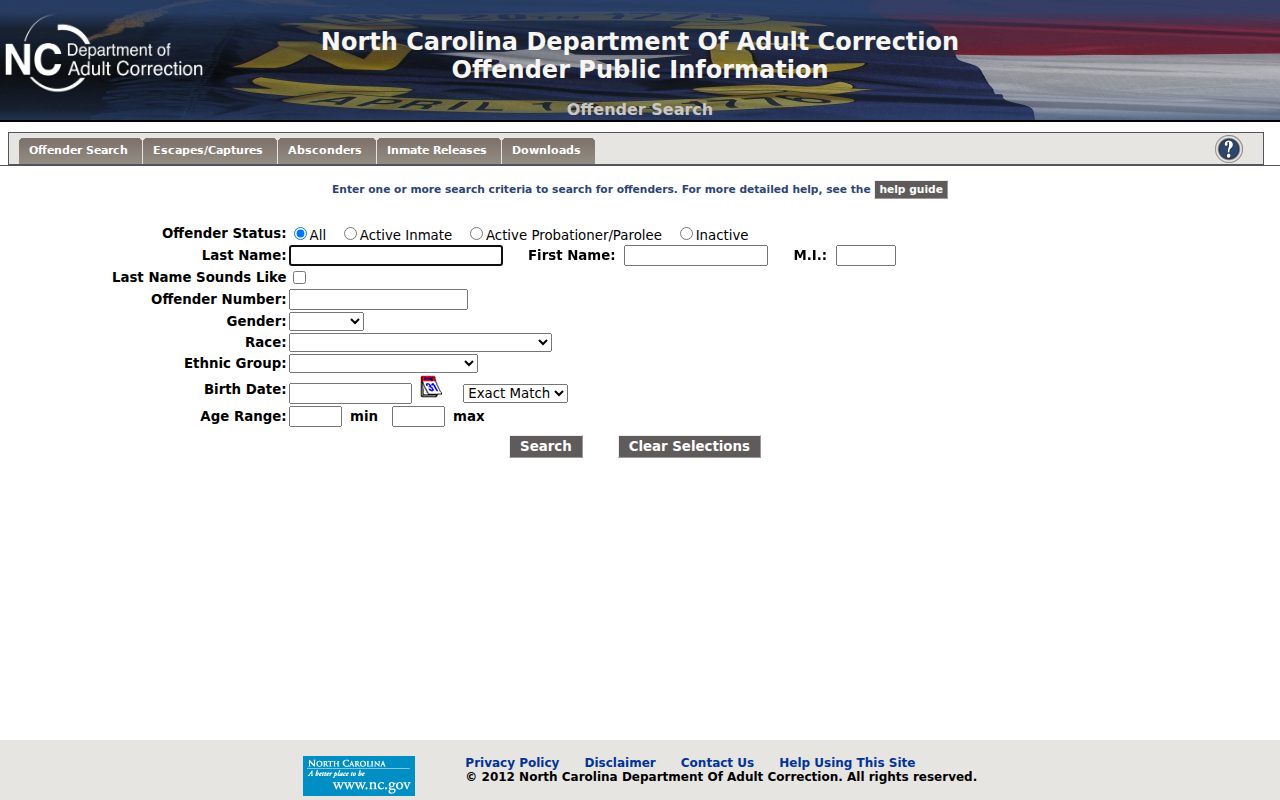
The state search covers prison and state supervision, not every person booked into the Halifax County jail. Search by offender number when possible, then compare identity, conviction, sentence, custody, location, and release fields.
Facility context: Official March 2026 minutes recorded 115 people in the existing 85-bed jail. The county's proposed 218-bed replacement is a project, not an open facility.
Halifax Arrests in State Records
Fingerprints allow the SBI Criminal Information and Identification Section to connect an arrest cycle with a State Identification number and, when applicable, an FBI index. Courts later report dispositions. That linkage reduces some same-name errors, but late or mismatched fingerprints and court reports can create gaps. North Carolina has no public SBI name-search portal.
A person reviewing their own repository history uses the SBI Right to Review process. It requires fingerprint submission by mail, costs $14 under the researched instructions, offers no expedited or in-person processing, and may take up to 20 business days. A Halifax fingerprint card is capture service, not the completed history report. For the court outcome, obtain the certified clerk record first.
State-run NCDAC Community Supervision handles probation and post-release supervision.
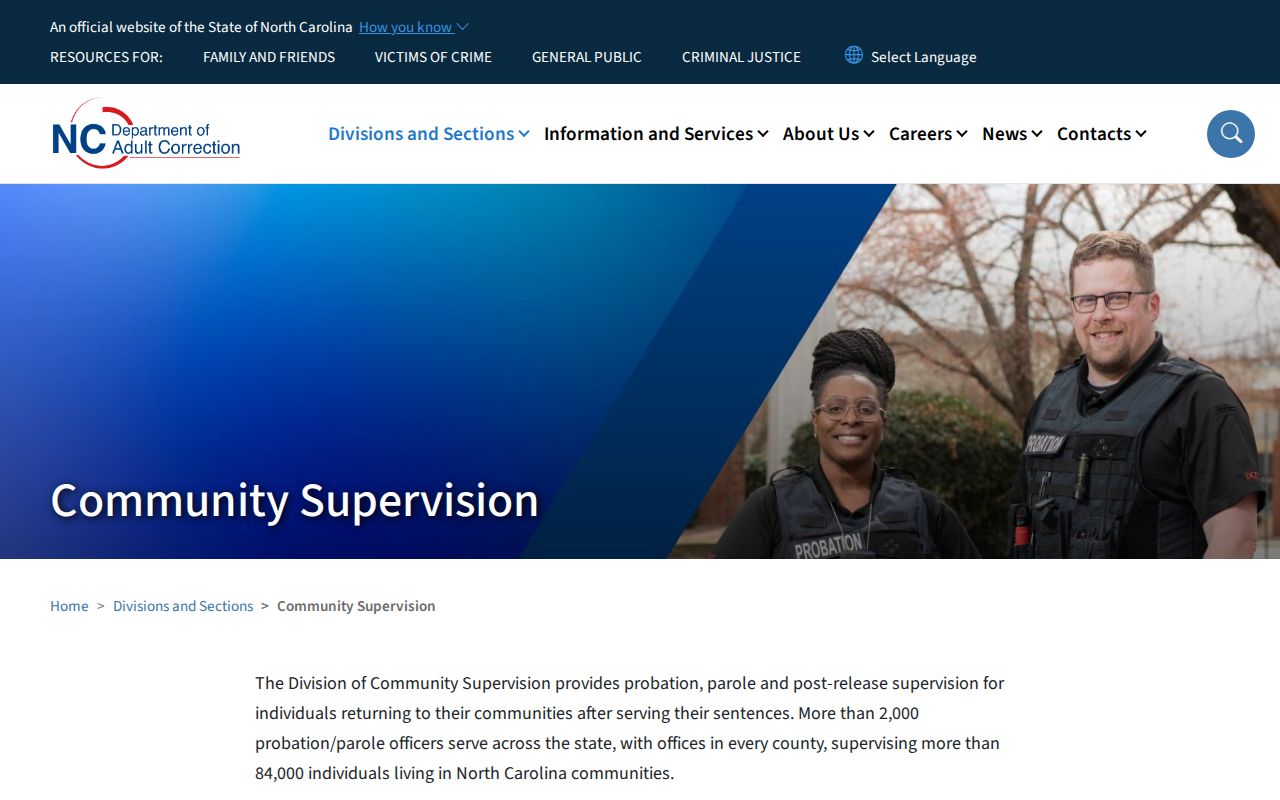
The supervision page helps locate the proper state program, while the Halifax court file remains the public source for the sentence and filed violation proceedings.
Internal supervision notes are not the same as a public docket. When a violation is alleged, check for the filed court proceeding and its result. A violation filing or order for arrest is not itself a final revocation. The judgment and later court orders show what the judge imposed, while NCDAC shows the current correctional setting at the public level.
Arrests Are Not Convictions
Arrest and conviction records are created at different points and prove different facts. A booking shows that an agency took a person into custody on an alleged charge. Only a court disposition establishes whether that charge led to guilt. The comparison should stay intact even when a name, charge description, or date appears in both systems.
| Point | Arrest record | Conviction record |
|---|---|---|
| Creator | Arresting agency and jail | District or Superior Court |
| What it proves | An arrest or booking occurred | The court entered a finding of guilt |
| Main source | Agency report and jail system | Clerk docket and judgment |
| Possible end | Release, no filed charge, dismissal, or later case | Sentence, appeal, or qualifying relief |
For filed outcomes, use the Halifax County criminal court case record. Read each charge, not just the case status.
Note: An arrest is an accusation, not proof of guilt, and some Halifax County bookings never result in a conviction.
Halifax Arrest Records After Dismissal
A dismissal or acquittal ends the charge without conviction, but it does not by itself erase every agency, jail, court, or repository trace. North Carolina uses the term expunction for statutory removal of qualifying records from ordinary access. Eligibility depends on the precise charge, result, age, prior history, waiting period, and current law. Serious offenses and many registry-related offenses are excluded from broad relief.
The official Article 32 expunction statute index organizes the available North Carolina paths.
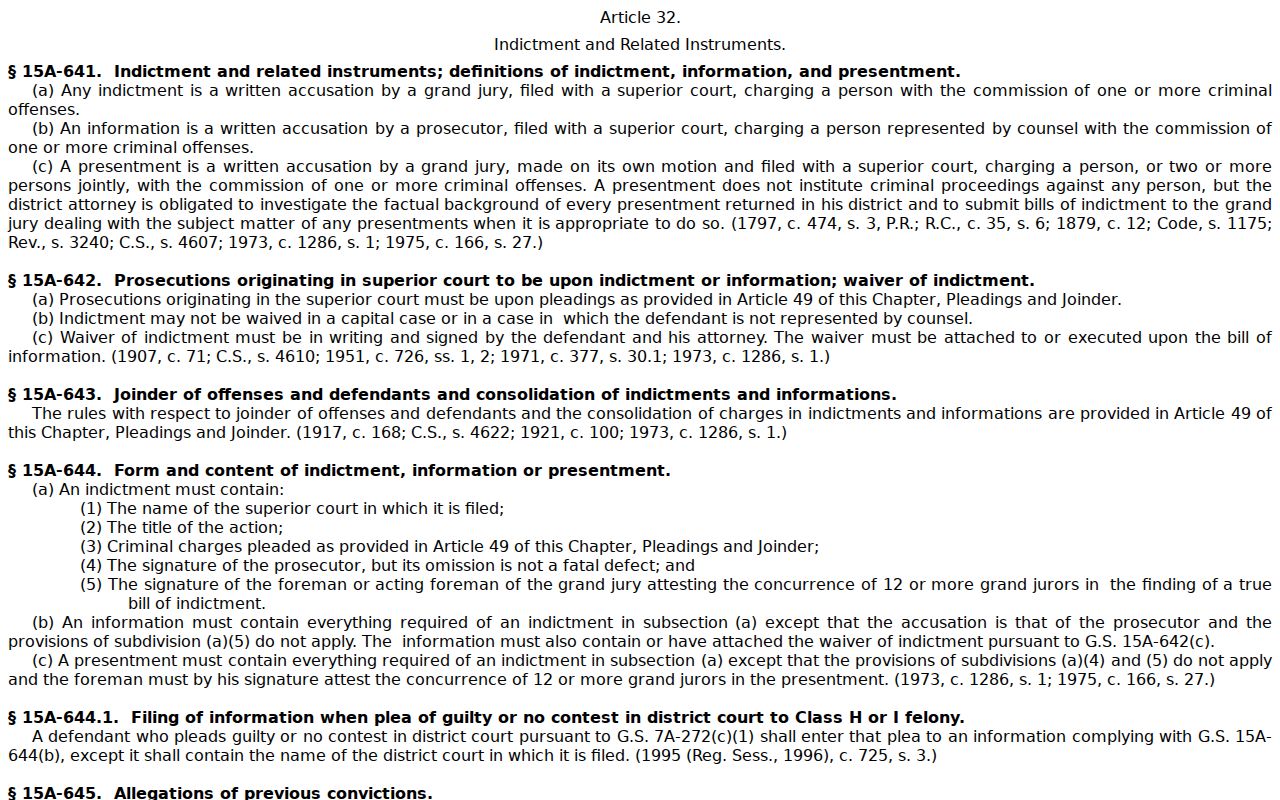
Use the current Judicial Branch form that matches the statutory ground and file through the Halifax clerk. After an order, updates can take time. Keep a certified copy and contact the official custodian that still displays the record.
A federal custody question follows another path. The Federal Bureau of Prisons inmate locator covers federal prisoners within its stated date range.
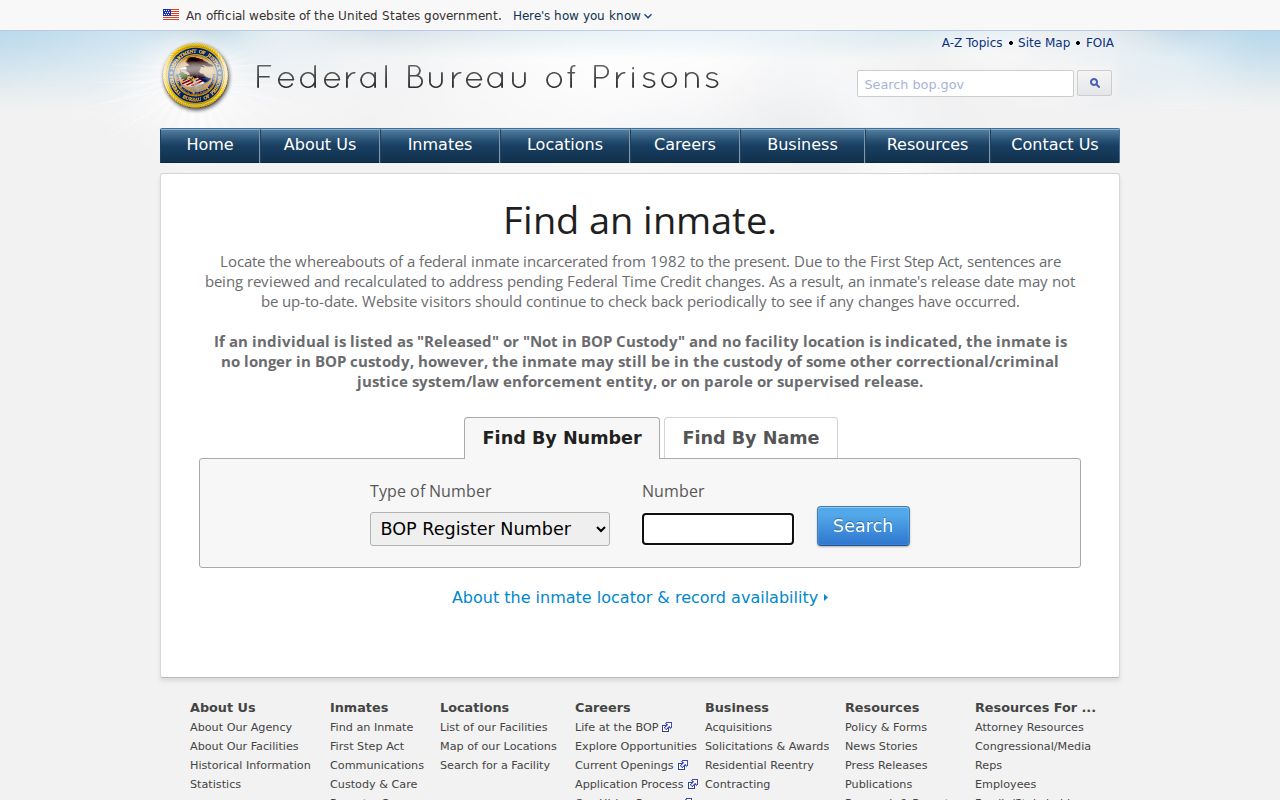
The federal locator does not include people held only in the Halifax jail and should not be used as a substitute for the county booking source.