
Checking Criminal History in Halifax County
Begin with the event, not with a broad name query. The North Carolina eCourts Portal is the first remote stop for a pending or disposed Halifax County court case. A recent detention belongs in the sheriff's inmate source. A state prison or supervision record belongs in NCDAC Offender Search. Only the subject's fingerprint submission produces an SBI Right to Review. These channels overlap, but none is a full substitute for the rest.
Use a full legal name, middle name, spelling variants, and a case number when known. Compare the county, filing date, charge, and public identity fields before drawing any conclusion. One Halifax County case can contain several charges with different outcomes, so open the detail and read each disposition. Finish at the clerk when a certified judgment or a missing older document matters.
- Search eCourts Portal by the most exact name or docket number available, with Halifax selected as the county.
- Record the case number, court division, filing date, charge list, status, and each charge-level result.
- Check the official court-date tool if a hearing is pending, but do not mistake a calendar entry for the full docket.
- Contact the Halifax County Clerk for paper files, older material, corrections, and certified copies.
- Use sheriff, NCDAC, or SBI channels only for the custody or fingerprint record each one actually maintains.
Halifax County Arrest and Court Records
Two neighboring Ferrell Lane offices hold different parts of the same event. The Halifax County Sheriff's Office and detention center are at 355 Ferrell Lane. The Halifax County Courthouse is at 357 Ferrell Lane. Ask the sheriff for a sheriff-created incident report, booking data, or current county custody. Ask the Clerk of Superior Court for filed charges, motions, court events, judgments, and certified outcomes. Physical closeness does not merge their legal roles.
The official Halifax County Courthouse page shows the current court location and access details.
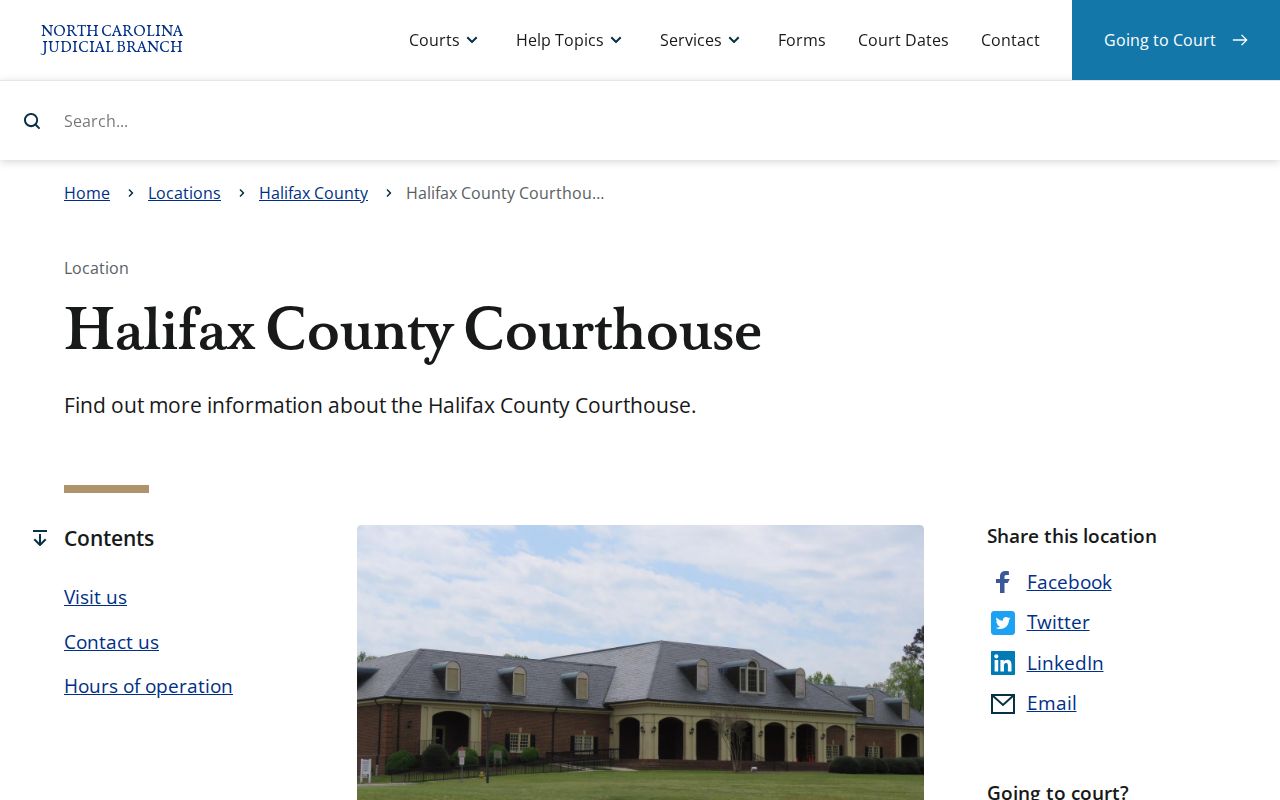
The courthouse image helps distinguish the modern criminal records destination from the Historic Courthouse at 10 North King Street. Present-day case-file work normally goes to the Ferrell Lane court unless staff direct otherwise.
Clerk of Superior Court
357 Ferrell Lane
Halifax, NC 27839
252-593-3000
Monday through Friday, 8:30 a.m. to 5:00 p.m.
Halifax County Sheriff
355 Ferrell Lane
Halifax, NC 27839
252-583-8201
Call to confirm the correct records counter and current procedure.
Note: The clerk cannot certify a sheriff narrative, and the sheriff cannot replace the clerk's judgment or final disposition.
North Carolina Official Background Checks
North Carolina does not offer a public SBI portal where anyone can buy a name-based rap sheet. The North Carolina State Bureau of Investigation, Criminal Information and Identification Section, keeps the central fingerprint repository. A person may request their own fingerprint-based Right to Review by following the SBI mail process. The published route costs $14, has no expedited or walk-in processing, and may take up to 20 business days.
The public court alternative is a statewide name search performed through a Clerk of Superior Court for $25. It searches court records, not the fingerprint repository. Portal is useful for discovery but the Judicial Branch says it is not the official background-check product. A court search can miss an event not filed as a case, while a repository record may depend on timely fingerprint and disposition reporting.
The SBI comparison of official record channels sets out those distinctions.
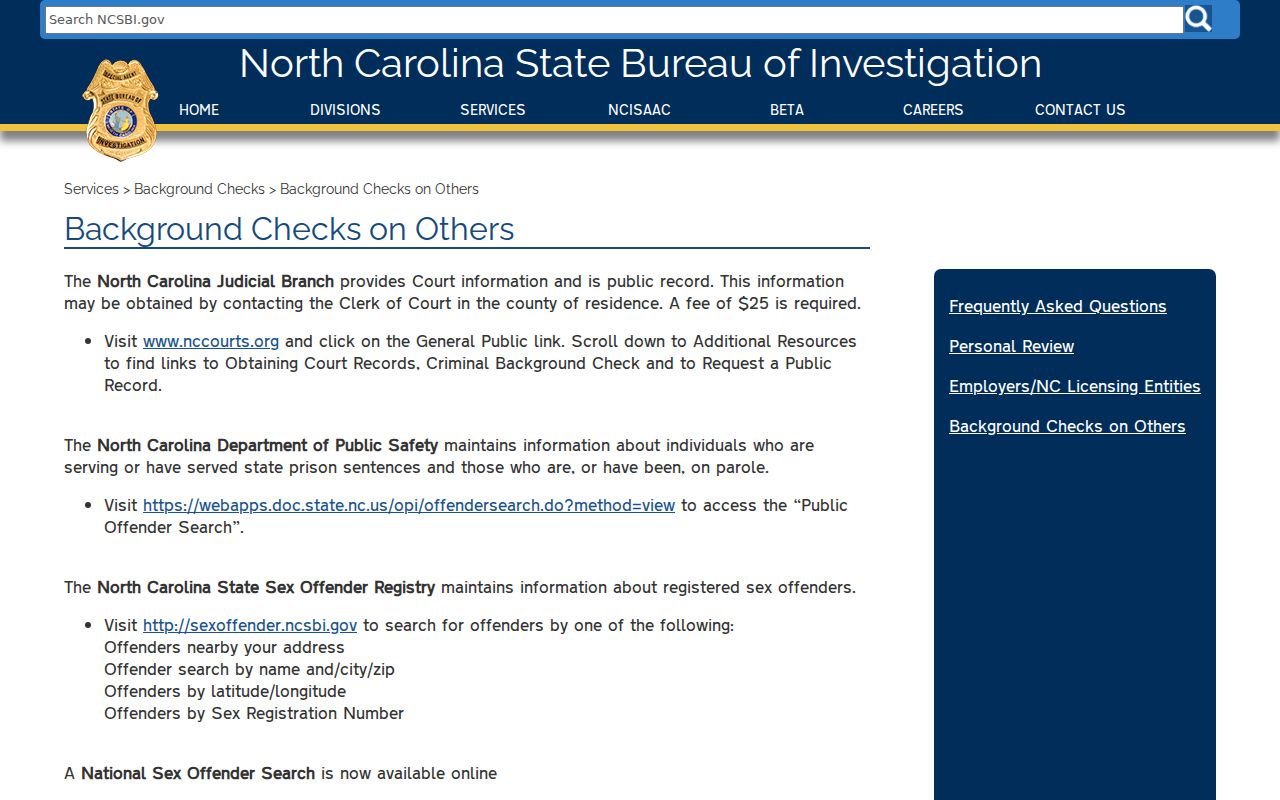
The comparison reinforces a key Halifax County rule: choose the product by its coverage and identity method, not by how quickly a search screen returns a name.
Halifax County Fingerprint Records
Fingerprint capture and the completed criminal record are separate services. Halifax County's older FY2022-23 fee schedule lists fingerprint cards at $10 per card. That payment covers capture, not an SBI or FBI history. Confirm today's cost, identification rules, card format, and available times with the sheriff before traveling. The completed SBI self-review requires the state form, fingerprints, identity material, fee, and mail submission.
The SBI Criminal Information and Identification page is the controlling source for Right to Review instructions and correction contacts.
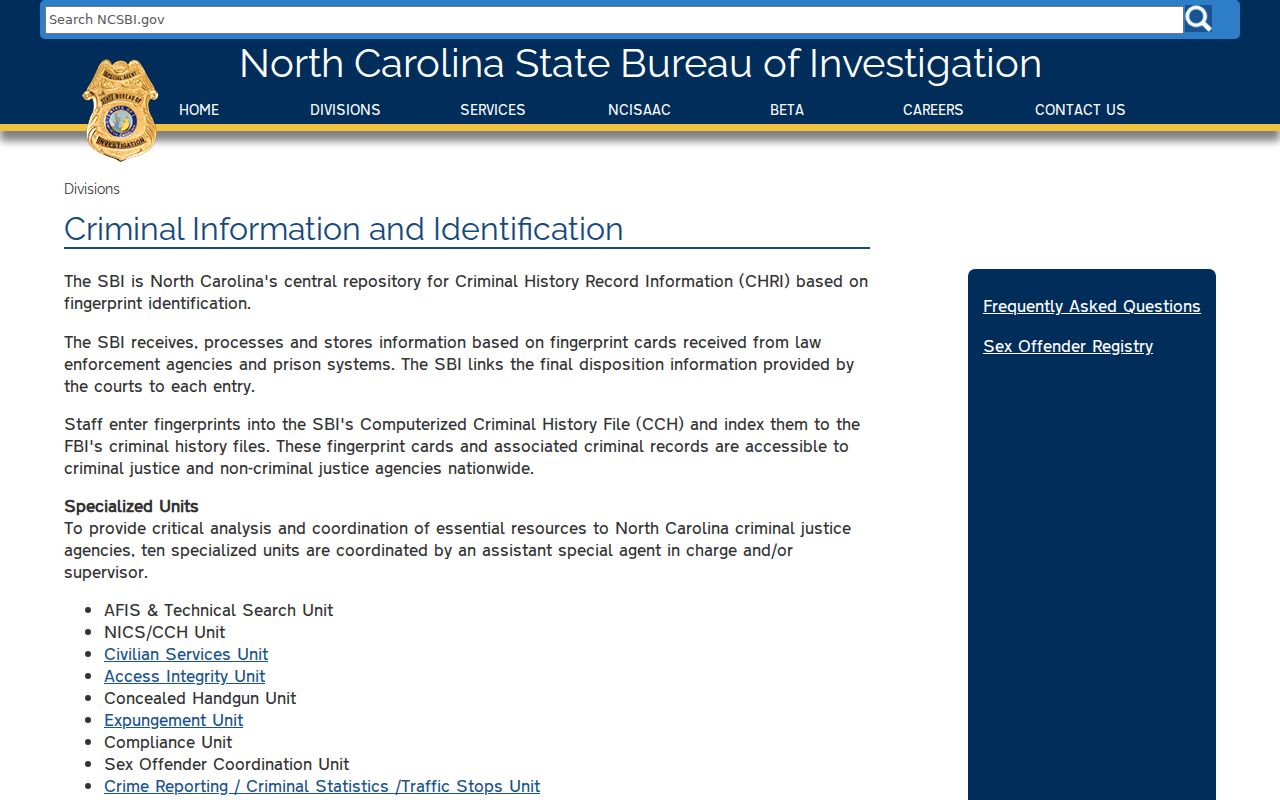
A fingerprint-linked result is stronger than a name match because it ties arrest cycles to biometric identity. It can still need correction when a reporting agency or court has not supplied the right disposition.
| Route | Identity basis | What it covers | Published cost |
|---|---|---|---|
| SBI Right to Review | Fingerprints | The subject's North Carolina repository history | $14 |
| Clerk statewide search | Name | North Carolina court records | $25 |
| Halifax fingerprint card | Fingerprints captured | Card service only, not a history | Older schedule lists $10 per card |
Criminal Record Types
Halifax County criminal records describe different steps. The arresting agency creates an incident or arrest report. Jail intake creates booking and custody fields. A magistrate issues process and sets initial release conditions. Prosecutors decide what charges to file, amend, or decline. The clerk then maintains the court docket and judgment. SBI links fingerprint-supported arrest cycles with outcomes reported back by courts.
A correctional or registry result answers a narrower question. NCDAC data covers state custody and state supervision, not every local jail detainee. The sex offender registry covers people with a current legal duty to register, not everyone with any criminal conviction. Warrants require direct confirmation because public case screens can lag or omit protected process.
Charge level also affects where a Halifax County case moves and how a judgment reads. North Carolina Superior Court hears felony trials, while District Court handles misdemeanors and early felony stages. The actual statute, offense date, charge class, prior-record level, and judgment control the result.
- Felonies: North Carolina classes run from A through I, with the current felony punishment structure using offense class and prior-record level.
- Misdemeanors: Classes A1, 1, 2, and 3 use the misdemeanor sentencing table and the facts of the judgment.
- General punishment rules: G.S. 14-3 applies when an offense law does not state its own punishment.
- Infractions: These are noncriminal violations even though they can appear in a court search.
- Booking record
- The jail's intake and custody entry, including received charges and bond data at the public level.
- Disposition
- The result of each filed charge, such as guilty, dismissed, or not guilty.
- Rap sheet
- A fingerprint-linked repository history made from arrest cycles and reported outcomes.
- Calendar
- A schedule of court events, not the complete docket or judgment.
- Expunction
- North Carolina's statutory process for removing a qualifying record from ordinary public access.
Halifax County Jail and Custody Records
The Halifax County Detention Center provides an official inmate-search page, but its data changes quickly and its released-inmate view is limited to the prior 24 hours. Some people may be excluded. When the interface does not answer the question, call the detention center at 252-583-3081 with the full name. Once a sentenced person moves into state custody or supervision, the correct source changes to the North Carolina Department of Adult Correction's Offender Public Information search.
That handoff can make a person seem to vanish from a county source even though custody continues elsewhere. Compare the offender number, identity fields, sentence, admission date, location, and supervision status. A county booking charge and a state correctional conviction are not interchangeable. For the broader path from arrest to filed case, the dedicated Halifax County arrest lookup explains each local channel.
The Judicial Branch Halifax County hub also connects court calendars and local services.
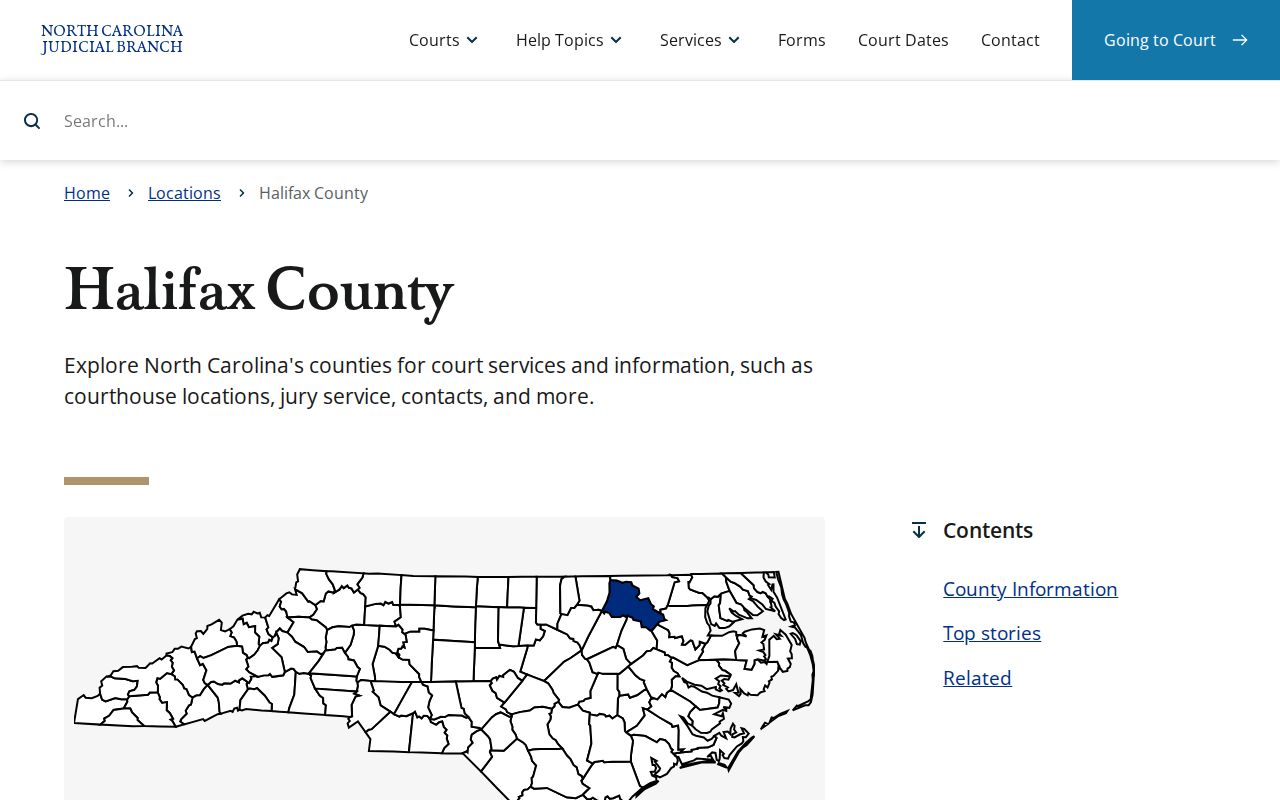
This official view is useful for court routing, while custody questions still belong with the sheriff or NCDAC based on where the person is held.
Inside a Halifax County Criminal Record
Read fields in context. A court header gives the Halifax location, docket number, division, file date, case type, and status. Each charge may add an offense description, statute, date, level, and separate disposition. Public entries may also show counsel, hearing dates, orders, judgment, costs, restitution, or compliance events. Older documents and some scanned items may only be available through the clerk.
A booking entry centers on the intake event. It can show the booking number and time, arresting agency, received charges, bond, facility, and release. A repository history adds identifiers, tracking numbers, and outcomes reported back to SBI. Social Security numbers, protected addresses, financial identifiers, juvenile data, and victim information do not appear like ordinary public fields.
| Name and identifiers | Legal name, aliases, and approved identity details used to distinguish people. |
|---|---|
| Arrest and booking | Agency, event date, booking number, intake charges, bond, custody, and release where public. |
| Filed charges | Court allegations, statute references, offense level, filing date, and charge status. |
| Disposition | The outcome of each charge, not merely the overall label that a case is disposed. |
| Sentence | The court's judgment, custody or probation terms, costs, and other ordered consequences. |
Note: A same-name Halifax County result should be matched with several lawful identifiers before anyone treats it as the correct person.
Halifax County eCourts Records Since 2025
Halifax County joined North Carolina eCourts Track 8 in April 2025. Legacy case information moved into the Odyssey and Enterprise Justice environment, and Portal became the main remote public search at approved access levels. Courthouse terminals, clerk assistance, paper files, and certified-copy requests still matter. Older web directions that describe Halifax County as fully dependent on legacy terminals are now stale.
Portal searches can use a person name or exact case number. Select Halifax as the county, narrow by first and middle name, and use date controls when the screen provides them. Open the case rather than relying on the results list. Public access varies by role and record classification, so protected or unscanned material may not appear online.
| Portal field | Best use | Main caution |
|---|---|---|
| Last or business name | Start a person search | Common names need more checks |
| First and middle name | Narrow possible matches | Spelling and aliases may differ |
| Case number | Open a known docket | Enter the exact identifier |
| County or location | Limit results to Halifax | A statewide history may involve other counties |
| Date range | Focus a calendar or event path | A calendar is not the whole file |
Public Access Laws in North Carolina
Public access depends on both the custodian and the record. North Carolina Public Records Law generally supports inspection and copies, but criminal investigation files receive special treatment. Clerk records are generally open under a separate court-record statute. SBI criminal-history dissemination is controlled by law and does not become an unrestricted public name product. Juvenile, victim, sealed, expunged, and protected identifying material remains restricted.
The official Chapter 132 index supplies the current text behind agency-record requests.
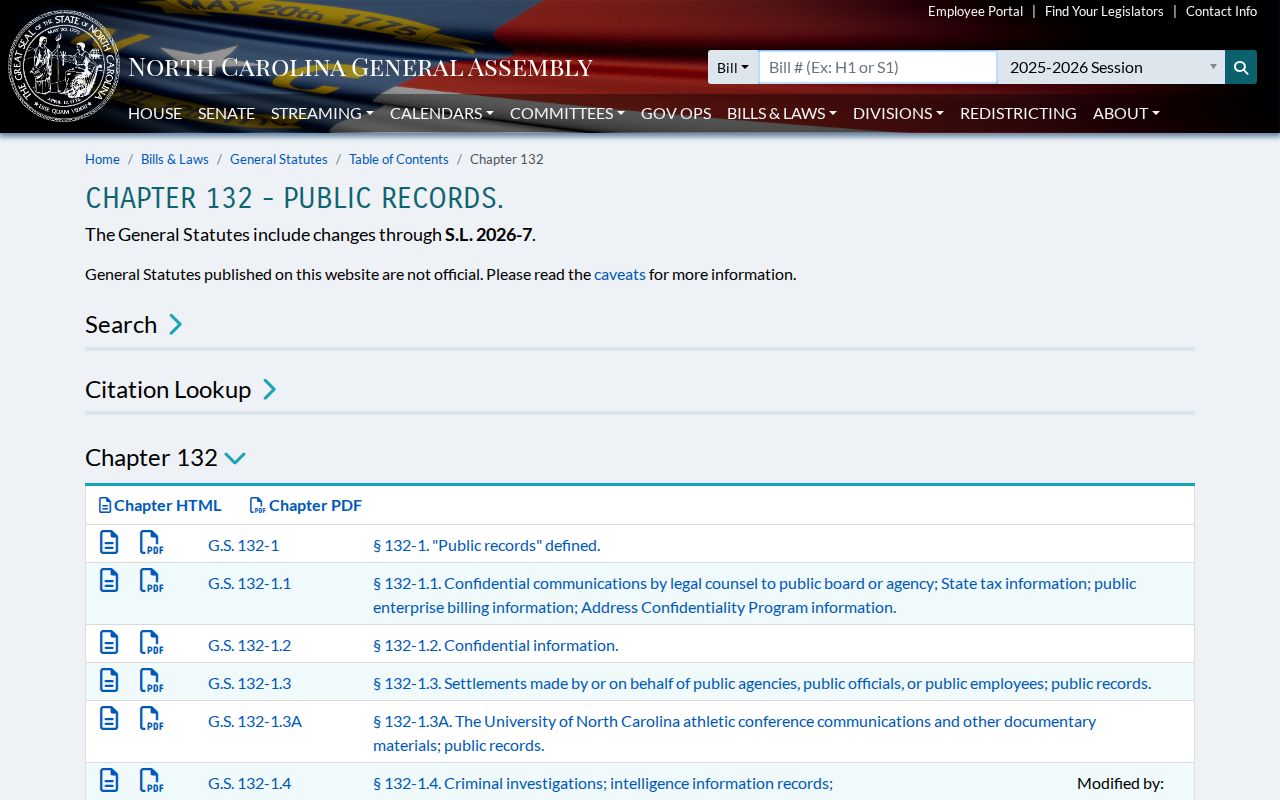
The statute source shows why a narrow request for a named report, date, and incident number works better than a demand for an undefined criminal file.
Key North Carolina laws:
G.S. 132-1 and 132-6 define public records and access duties, subject to specific exceptions.
G.S. 132-1.4 gives criminal investigation and intelligence records special rules while identifying basic information that may be released.
G.S. 7A-109 generally opens Clerk of Superior Court records to inspection, with exceptions and certified-copy fees.
G.S. 114-19 and related provisions control SBI criminal-history dissemination.
G.S. 14-208.5 and later sections govern registry duties, public access, and misuse.
Halifax County Warrant Record Checks
No verified public Halifax County sheriff warrant-name database was found in the official sources. Use an official chain instead of a commercial people finder. Call the sheriff at 252-583-8201 for its current procedure, search the court case and calendar for related process, and ask the Clerk or the correct magistrate about the next safe step. The Halifax magistrate line is 252-593-3019, Roanoke Rapids is 252-537-6070, and Enfield is 252-445-2961.
An arrest warrant rests on probable cause. An order for arrest may follow a failure to appear or comply. Search warrants, juvenile process, and sealed warrants may not be publicly available. Even a public screen can lag after an order changes. Do not rely on an old capture as proof that a warrant remains active or has cleared, and never send bond money based only on an unsolicited call.
The Halifax County court contact directory publishes clerk, judge, district attorney, and magistrate numbers.
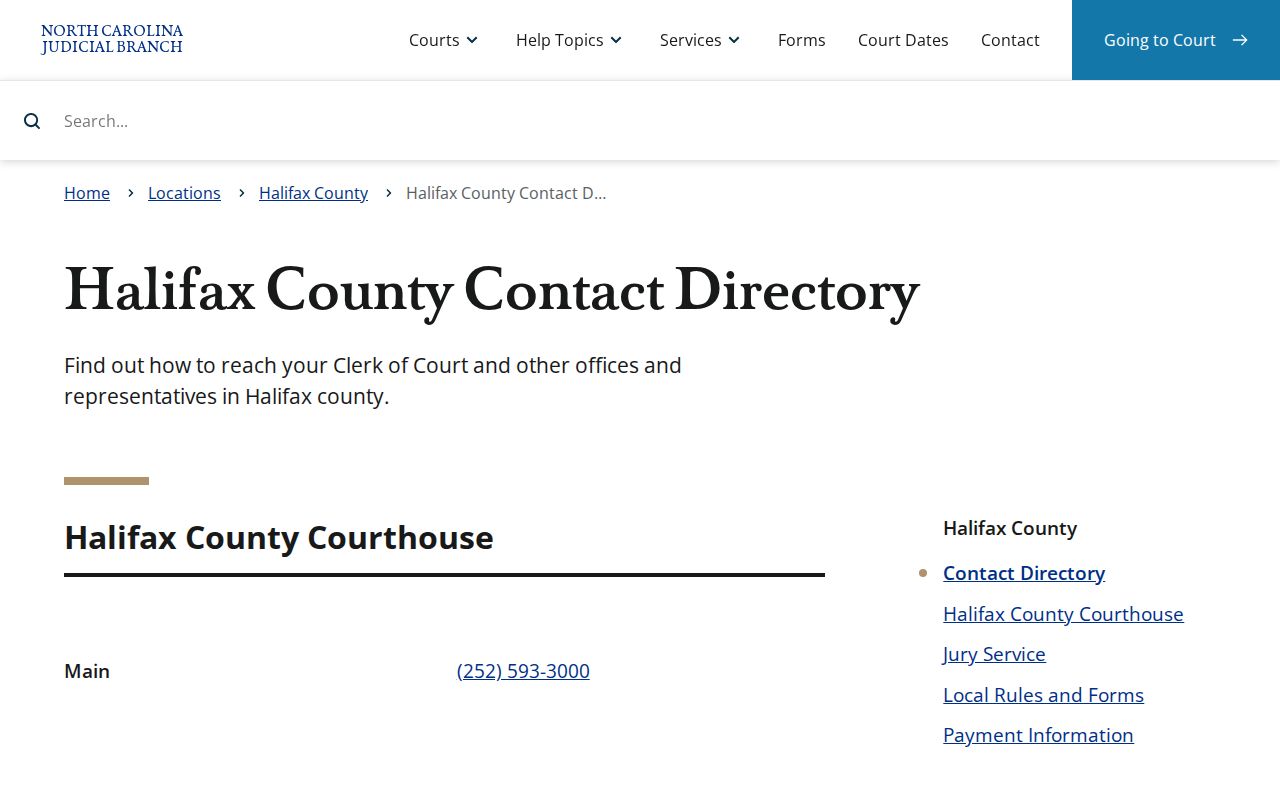
Those direct lines help route process questions, but the complete filed result still belongs in the clerk's case record.
Sealed, Expunged, and Restricted Records
North Carolina uses the term expunction. Eligibility depends on the exact statute, outcome, prior history, offense, age rules, and waiting period. Some dismissed or not-guilty matters may follow a different path from conviction-based petitions. Serious violent and many registration offenses are excluded. A certificate of relief is also not the same as expunction. The current law and matching Judicial Branch form control.
File a Halifax County petition through the Clerk of Superior Court. Forms may require case numbers, charges, disposition dates, history statements, and verified signatures. Fees and service steps vary by route, so confirm them with the clerk. After a judge signs an order, listed agencies must receive it and update their systems. That does not happen at once.
The North Carolina expunction statutes collect the different legal paths. Only the clerk, the court order, and each official custodian can confirm whether a specific record has been removed from ordinary access.
Halifax County Crime Record Context
Official numbers need a year and a scope. Halifax County had an estimated 46,992 residents in 2024 across 723.74 square miles. Sheriff, town police, and Highway Patrol records can all arise within that geography. A name search limited to one city department may miss a county or state-road event nearby.
The Census Bureau's Halifax County profile supplies the population and geographic baseline.
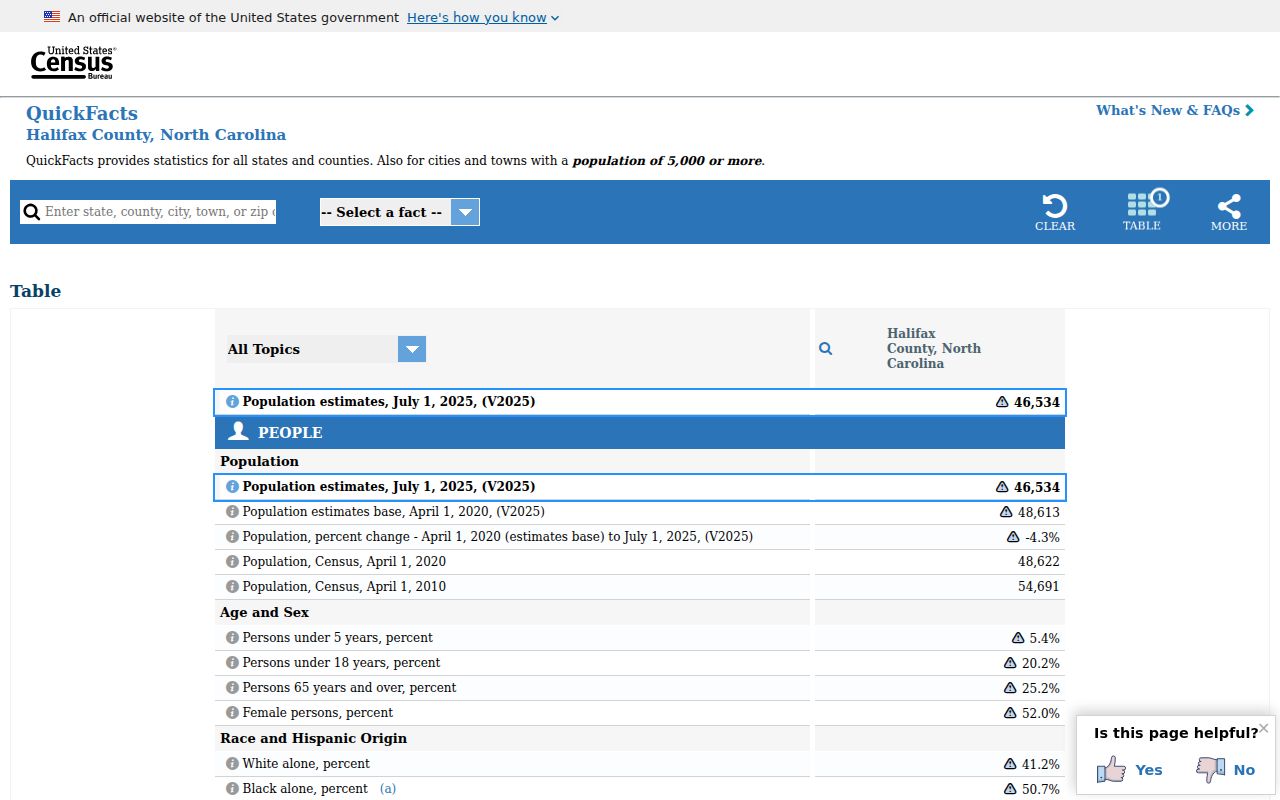
The official profile gives scale to Halifax County records without turning population change into a claim about crime or court outcomes.
SBI's 2024 summary reported a county index-crime rate of 2,752.8 per 100,000, down from 2,955.2 in 2023. The violent-crime rate rose from 543.4 to 626.1, while the property-crime rate fell from 2,411.8 to 2,126.7. Those mixed directions are more accurate than saying all crime rose or fell. The sheriff agency table counted 516 index offenses, which are not the same as arrests, defendants, court cases, or convictions.
Note: Agency offense totals measure reported offenses in a stated program and year, not guilt or a person's criminal history.
Halifax County Criminal Records by City
City police keep the incident and arrest reports they create, while county booking and state-administered court files follow different custodians. The top three incorporated places in the official 2024 estimates are Roanoke Rapids, Enfield, and Scotland Neck. Each city record page starts at local altitude, then routes detention questions to the sheriff and filed charges to the Halifax County Clerk.
Roanoke Rapids Criminal Records
Population estimate 14,592. City police reports can lead to Halifax County booking and court files.
Enfield Criminal Records
Population estimate 1,773. Enfield accepts several forms of written public-information requests.
Scotland Neck Criminal Records
Population estimate 1,638. Town limits help determine whether police, sheriff, or Highway Patrol holds a report.
Halifax County Court Record Milestones
Recent local changes affect how records are found and understood. The 2025 eCourts conversion shifted remote searches into one statewide platform. A 2024 public defender launch added a Halifax satellite after the state identified a regional shortage of defense counsel. In April 2026, Halifax Accountability and Recovery Court announced its first graduate after a 19-month treatment and supervision path.
These milestones do not erase the ordinary docket. Filed motions, orders, judgments, and qualifying supervision events remain with the court at the approved public level. Specialty-court participation can add process that a one-line charge search does not explain. Read the complete case and ask the clerk for the underlying public documents when a bare status is unclear.
The planned detention replacement is another forward-looking change. County materials describe a 61,000-square-foot, 218-bed project with more classification space, medical capacity, control functions, and an on-site magistrate. It is a project fact, not proof that the new facility is open. Confirm the current jail location before any visit.